Rome Travel Tips: Tickets, Metro, Airport Train and Dress Code
Rome travel tips for a first visit: booking the big sights, the Metro and contactless, the Leonardo Express, taxi fares, dress codes, closing days and the Trevi Fountain fee.
Book the big sights ahead, cover your shoulders and knees for churches, keep your bag zipped in crowds, and expect late dinners. That’s what most guides say, and the rest is detail. Roam Rome read 7 guides for this page, all in English, from travel blogs and a magazine. Every fare, hour and closing day below comes from an official page, not from those guides. Every place named is on the map, and the events page shows what’s on during your dates.
The tips are ordered by how many guides name them. A tip named by two guides or fewer is left out.
The short list
| Tip | Guides naming it (of 7) | Section |
|---|---|---|
| Book the big sights ahead | 7 | Tickets and closing days |
| Watch for pickpockets | 7 | Safety |
| Cover shoulders and knees in churches | 5 | Dress code |
| Take the Leonardo Express from Fiumicino | 5 | From the airport |
| Check closing days | 4 | Tickets and closing days |
| Use licensed taxis and confirm the fare | 3 | From the airport |
| Know the single ticket and day passes | 3 | Getting around |
| Tip little and expect a cover charge | 3 | Money and tipping |
| Expect late dinners | 3 | Meal times and coffee |
| Coffee at the bar, cappuccino in the morning | 3 | Meal times and coffee |
| Go in spring or autumn | 3 | When to go |
| Pack for summer heat | 3 | When to go |
| Refill at the free fountains | 3 | Water |
| Take care around Termini | 3 | Safety |
| Walk the centre, expect slow buses | 3 | Getting around |
| Skip restaurants right next to monuments | 3 | Meal times and coffee |
| Carry some cash | 3 | Money and tipping |
Tickets and closing days
Booking ahead is recommended by 7 of 7 guides read, and checking closing days by 4.
Every guide says to book the Colosseum and the Vatican Museums before you arrive, and the Borghese Gallery too. It’s not hard, but you can’t leave it to the day. Here’s what the official pages say, and you’ll want to check each on the day.
- Colosseum. Tickets carry a reserved entry time and go on sale 30 days before the visit, according to colosseo.it. Free first-Sunday tickets can’t be booked, so you collect them at the ticket offices.
- Vatican Museums. Open Monday to Saturday from 8:00 to 20:00, with the last entry at 18:00, and closed on Sundays except the last Sunday of the month, when entry is free from 9:00 to 14:00, according to the museums. The only official online shop is tickets.museivaticani.va.
- Borghese Gallery. Open Tuesday to Sunday from 9:00 to 19:00 and closed on Mondays, according to Turismo Roma. The gallery’s own ticket office says every ticket needs a reservation, free ones included.
- St Peter’s Basilica. Free, and open every day from 7:00 to 20:00 since 1 June 2026, with the last entry at 19:15, according to the basilica.
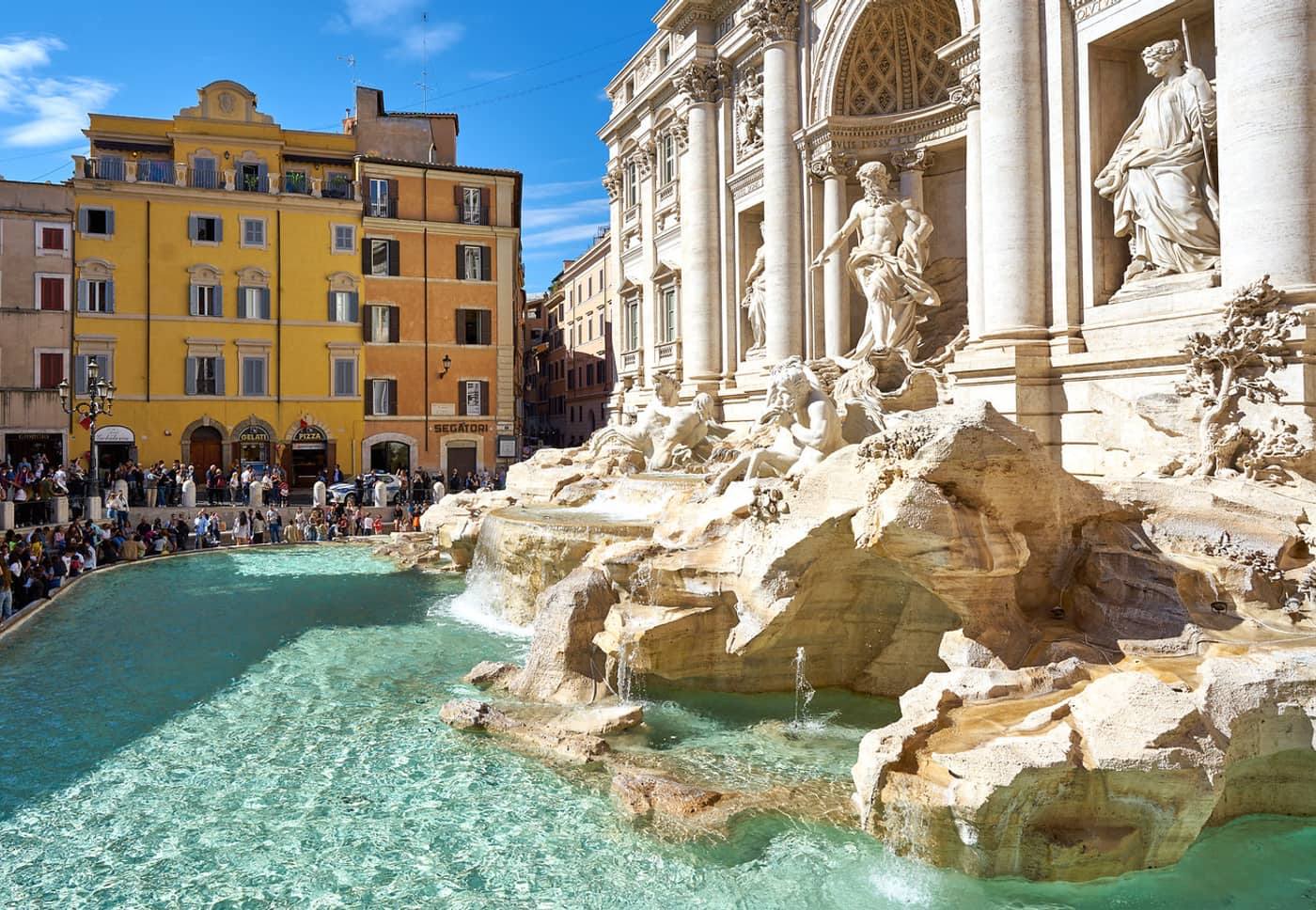
- Trevi Fountain. A 2 euro ticket has been needed since 2 February 2026 to enter the basin area, daily from 9:00 to 22:00, according to Turismo Roma. Residents, children under 5 and people with disabilities and their carers don’t pay.
Several guides say many museums close on Mondays, so use that day for a park or a long lunch.
Getting around
Walking the centre and expecting slow buses is named by 3 of 7 guides read, and the single ticket and passes by 3.
The centre’s small enough to walk, and three guides call walking the best way to find the neighbourhoods. They say buses are slow in traffic and the Metro has few lines, with three, A, B and C. Turismo Roma says a single ticket, the BIT, costs 1.50 euros and lasts 100 minutes, and the new fares from 1 July 2025 put the 24-hour ticket at 8.50 euros, the 48-hour at 15 and the 72-hour at 22. A weekly ticket is 29 euros. The single ticket is listed as unchanged, and ATAC has any later change.
You can tap a contactless card or a phone at the turnstiles on Metro lines A, B/B1 and C, according to Turismo Roma, and keep going on ATAC buses and trams within the 100 minutes. That page describes terms from 2019 and 2020, so you’ll want to look up the current daily fare cap with ATAC before you rely on it.
The Roma Pass costs 38 euros for 48 hours and 62.90 euros for 72 hours, and covers public transport, more than 100 attractions and the toilets at the P.Stop network. One guide says it rarely saves money and another says it’s good value unless your plans are unusual, so add up your own list first.
If you’re driving, the centre has restricted traffic zones. The Centro Storico zone is closed to unauthorised vehicles from 6:30 to 18:00 on weekdays and from 14:00 to 18:00 on Saturdays, excluding public holidays, and from 23:00 to 3:00 on Friday and Saturday nights, except in August, according to Roma Servizi per la Mobilità. Taxis can enter.
From the airport
The Leonardo Express is recommended by 5 of 7 guides read, and licensed taxis by 3.
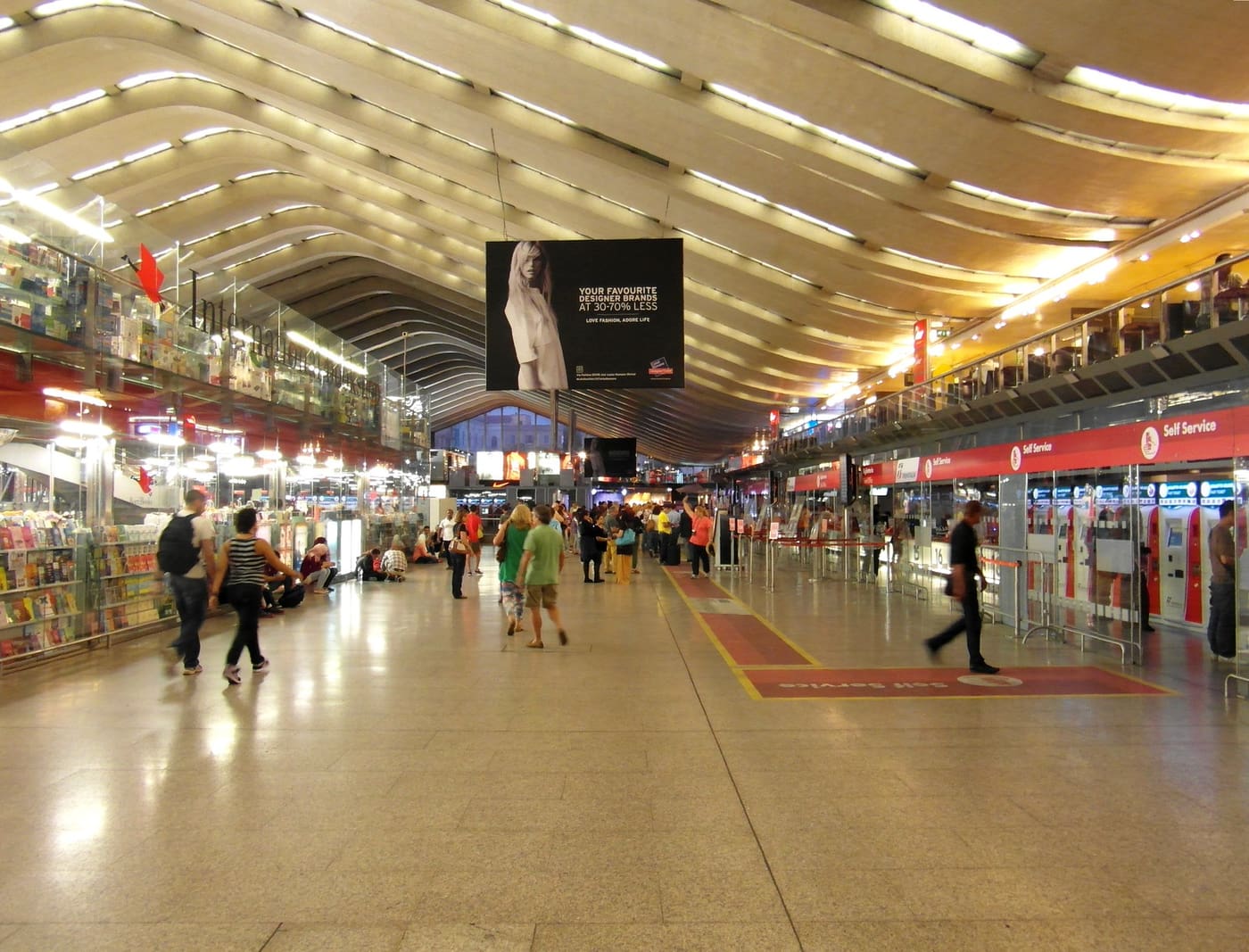
The guides agree on the train and disagree on the taxi fares, so use the official figures. The Leonardo Express runs direct from Fiumicino to Termini in about 32 minutes and costs 14 euros one way, and children under 12 travel free with an adult. From Fiumicino it leaves every 30 minutes from 6:23 to 23:23, with more trains at busy times, and from Termini every 30 minutes from 5:35 to 22:35. Turismo Roma also lists the FL1 train to Tiburtina, for Metro B, at 8 euros and about 48 minutes.
Taxis from Fiumicino to the area inside the Aurelian Walls are listed at a fixed 48 euros, and from Ciampino at 30 euros. Use the official taxi rank, ask the driver to confirm the fare, and don’t go with people who approach you in the arrivals hall. Ciampino has trains to Termini every 15 minutes, taking about 10 minutes, and ATAC buses 720 and 520 that take one 1.50 euro ticket.
Dress code
Covering shoulders and knees is recommended by 5 of 7 guides read.
This one’s enforced. St Peter’s Basilica asks everyone to cover their shoulders, men to wear long trousers and women a skirt below the knee or trousers. The Vatican Museums don’t allow sleeveless or low-cut clothes, shorts above the knee, miniskirts or hats, and photos and phones are banned in the Sistine Chapel. A light scarf in your bag covers most problems, and it doesn’t take up room.
Safety
Pickpockets are flagged by 7 of 7 guides read, and care around Termini by 3.
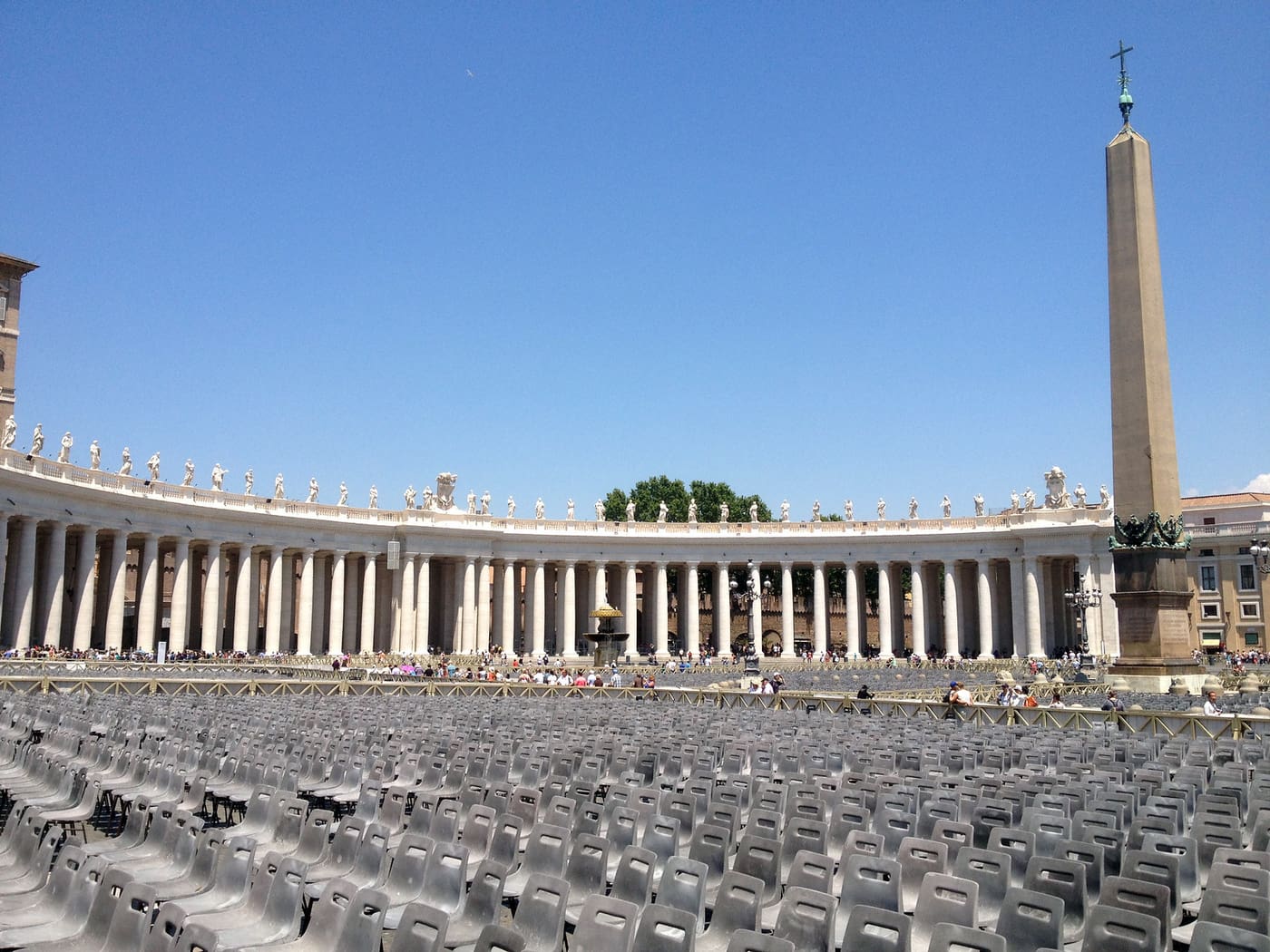
Guides call violent crime against tourists rare, and pickpockets the main worry. They name Termini, Metro stations, crowded buses and tourist sites such as the Trevi Fountain, the Colosseum, the Spanish Steps and St Peter’s Square. Two guides single out bus 64 to the Vatican, one adds bus 40, and one suggests taking the Metro to Ottaviano instead. Keep your bag zipped and in front of you, carry only what you need, and don’t accept help with bags from strangers.
Three guides name Termini, and one says to avoid the streets around the station in the evening. The Esquilino and Termini page covers the area.
Meal times and coffee
Late dinners are noted by 3 of 7 guides read, coffee customs by 3, and avoiding restaurants beside monuments by 3.
One guide puts lunch between 12:00 and 15:00 and dinner from about 19:30, busiest between 20:30 and 21:00, and two others say Italians start dinner from 20:30. Kitchens often stay open past 22:00. Aperitivo starts between about 17:00 and 19:00, depending on the guide. Three guides say to skip restaurants right next to a monument, because you pay for the view. Walk a few streets away, where you won’t pay for the view.
Coffee comes with rules. Cappuccino is a morning drink, with the cutoff put anywhere from 11:00 to noon, and the guides suggest an espresso or a macchiato after that. Standing at the bar is cheaper than sitting down, and one guide says a table can nearly double the price.
Money and tipping
Tipping little and expecting a cover charge is noted by 3 of 7 guides read, and carrying cash by 3.
The guides agree that tipping’s optional, and the amounts they give run from rounding up to a euro or two. Check the menu for a cover charge, the coperto, or a bread charge, before you sit down. It isn’t a tip. Three guides say to carry some cash for small purchases.
Water
The free fountains are recommended by 3 of 7 guides read.
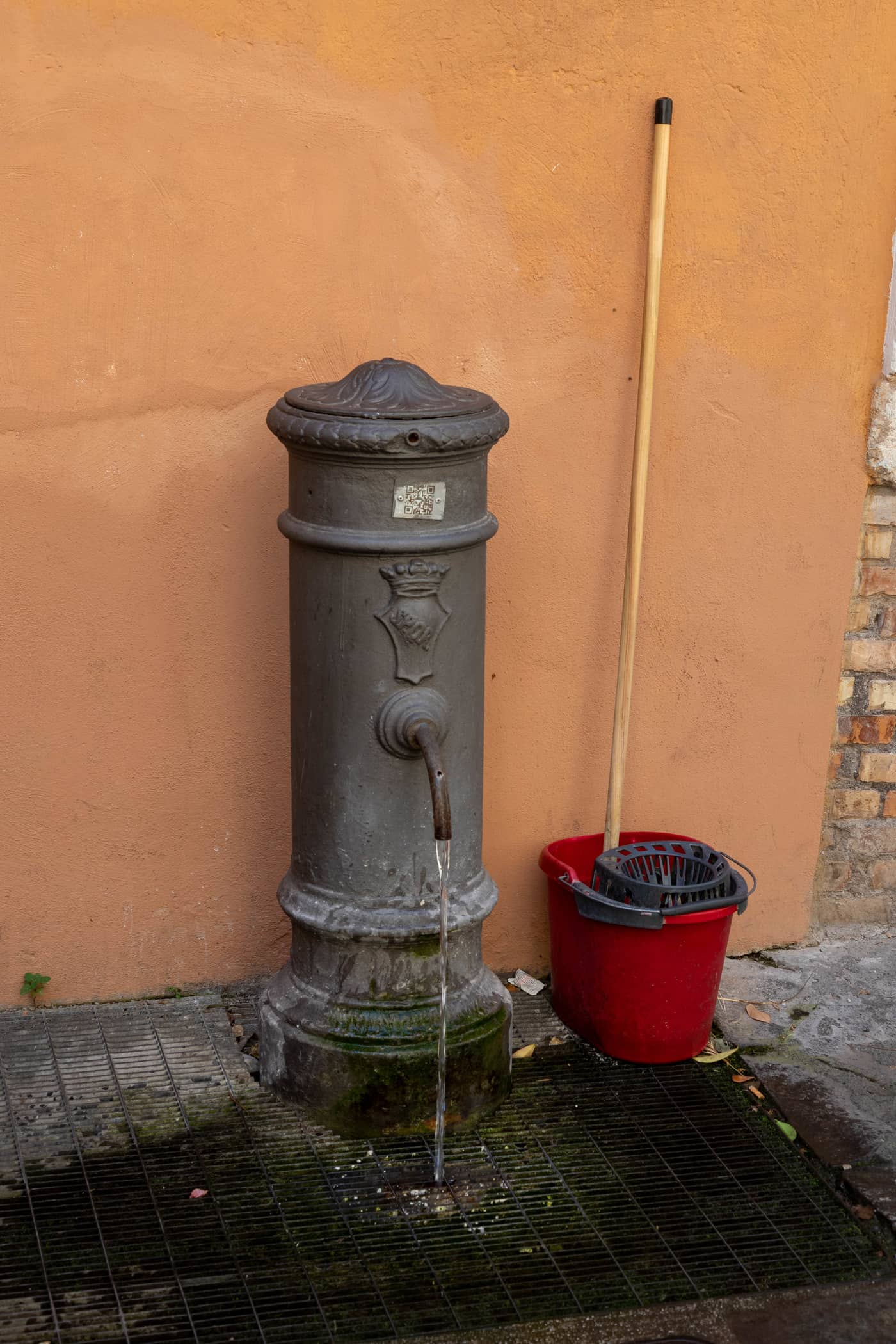
Rome’s public drinking fountains, the nasoni, give free water, and the guides say it’s fine to drink. You’ll see them all over the centre. Bring a reusable bottle and refill it as you walk.
When to go
Spring or autumn is recommended by 3 of 7 guides read, and summer heat is flagged by 3.
The guides give April to June and September to October as the best months, and one names May and October. They warn about heat in July and August, and one says to avoid June to August because of heat and humidity. One guide says Rome has no real low season, so expect crowds all year. For a colder visit, see Rome in winter.
Less common tips
Two guides say not to cram the Vatican and the Colosseum into one day, and two suggest getting a local SIM or data plan. Both are fair, but they’re named by too few guides to count here. For a first itinerary, see things to do in Rome, and for a base, where to stay in Rome.
Frequently Asked Questions
What’s the best way to get around Rome?
Walk the centre and use the Metro, buses and trams for longer trips. A single ticket costs 1.50 euros and lasts 100 minutes, according to Turismo Roma.
How do you get from Fiumicino airport to the centre?
By the Leonardo Express train to Termini, about 32 minutes for 14 euros, according to Turismo Roma. A taxi to the area inside the Aurelian Walls is listed at a fixed 48 euros.
Do you need to book the Colosseum and the Vatican in advance?
Yes. Colosseum tickets carry a reserved time and go on sale 30 days ahead, and all 7 guides read say to book the big sights early.
What should you wear to visit churches in Rome?
Cover your shoulders and, at St Peter’s, wear long trousers or a skirt below the knee. The Vatican Museums also ban shorts above the knee and hats.
Do you have to pay to see the Trevi Fountain?
You pay 2 euros to enter the basin area, daily from 9:00 to 22:00, since 2 February 2026, according to Turismo Roma. Residents of Rome and children under 5 don’t pay.
Is the Vatican open on Sundays?
Only on the last Sunday of the month, from 9:00 to 14:00, when entry is free. St Peter’s Basilica is open every day.
Is Rome safe for tourists?
Guides say pickpockets in crowds, on buses and around Termini are the main risk, so keep your bag zipped and in front of you.
For the rest of your trip, see things to do in Rome, where to stay in Rome and best day trips from Rome.
Sources: 7 guides in English, and 11 official pages
Guides in English
- 35+ Important Rome Travel Tips You Need to KnowOur Escape Clause
- Rome tips for beginners travel guideMama Loves Rome
- Essential Rome Travel Tips: Things to Know Before You GoThat Texas Couple
- Rome travel tipsTime Out
- Essential Rome, Italy Travel Tips That Everyone NeedsSaturdays in Rome
- 10 essential travel tips for RomeThe Travel Hack
- Rome Travel Tips: 13 Things You Need to Know For a Better ExperienceNishiv
Official pages
- By plane (Turismo Roma)turismoroma.it
- Rome public transport new fares from 1 July (Turismo Roma)turismoroma.it
- tap and go (Turismo Roma)turismoroma.it
- Roma Pass (Turismo Roma)turismoroma.it
- ZTL in the centre (Roma Servizi per la Mobilità)romamobilita.it
- Trevi Fountain: new entry fee (Turismo Roma)turismoroma.it
- Vatican Museums days and hours of closuremuseivaticani.va
- Vatican Museums useful informationmuseivaticani.va
- St Peter's Basilica dress codebasilicasanpietro.va
- New opening hours for St Peter's Basilicabasilicasanpietro.va
- The Borghese Gallery (Turismo Roma)turismoroma.it
Places in this guide
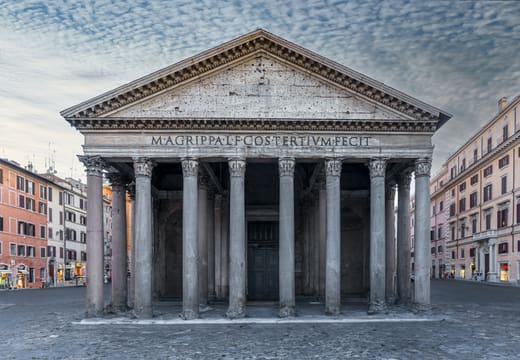
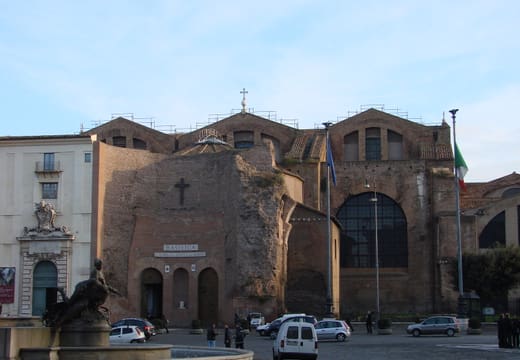
Photos show the actual places, licensed under Creative Commons and credited to their photographers.
Find hotels in Rome
Browse live availability and compare prices for your dates.
See hotels near Rome on Booking.comPrices are for the night of Saturday 21 November. You can change the dates on Booking.com. If you book, Roam Rome earns a small commission from Stay22 at no extra cost to you.